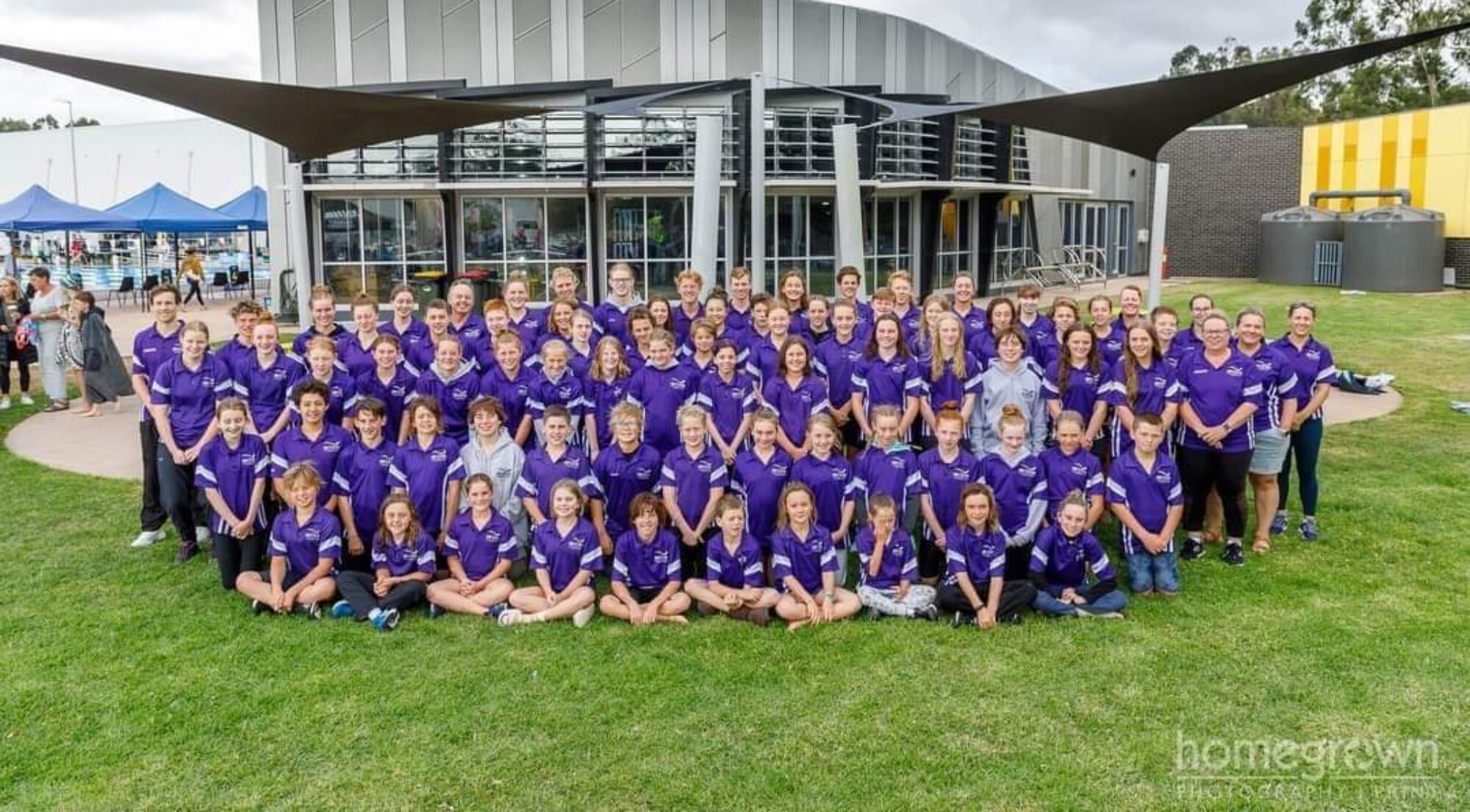
Meet the SGB Multi Class swim team: Fostering Competitive Swimmers with Physical and Hidden Impairments.
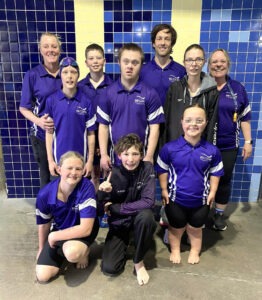 South Gippsland Bass Swimming Club is home to one of Victoria’s largest Multi Class swimming squads. A dedicated team of swimmers and coaches working with a range of disabilities and impairments, they train hard to compete at varying levels from local competitions through to National Championships. Matching their able body peers, their focus is on the pursuit of sporting performance, measured through competition and personal bests, while tailoring training to suit the individual needs of each swimmer.
What is Multi Class Swimming?
Multi Class swimming is a competitive program for athletes with disabilities and impairments. It is modelled on the Paralympic system, where swimmers are classified according to their functional abilities to ensure a level playing field.
The structure of the Multi Class system goes beyond para swimming and allows athletes with hidden disabilities dedicated competition within this structure, rewarding skill and competitive spirit rather than simply encouraging participation.
How? The Classification System.
Each swimmer is assigned a classification between S1 and S19, reflecting the nature and severity of their impairment (“S” representing swimming):
- S1–S10: Physical disabilities, ranked from most to least severe (e.g. limb deficiency, coordination impairment, impaired muscle power, cerebral palsy and short stature).
- S11–S13: Vision impairments, ranging from total blindness to less severe visual disabilities.
- S14: Intellectual impairment (IQ-related).
- S15: Hearing impairment.
- S16–S19: Other classes: transplant (S16), temporary transition class (S17), down syndrome (S18), and autism spectrum disorder (S19).
The lower the number, the more significant the impairment. Notable athletes, such as Paralympians Ahmed Kelly (S3), Alexa Leary (S9) and Col Pearse (S10) exemplify the elite level of performance possible within these classes.
How does competition work? Multi Class Point Scoring (MCPS)
Naturally, more physically able swimmers are going to be stronger and faster in the water compared with lower functioning swimmers.
Unlike able body swimming, Multi Class swimming is not necessarily the swimmer who finishes the race first, wins the race.
This is where the Multi Class Point Scoring (MCPS) system comes into play and evens the playing field. The MCPS system compares each swimmer’s time to the world record in their classification, then calculates a point score for their performance rather than a finish time.
The swimmer with the highest points wins the race.
The world record time in each class equals 1000 points, and athletes are ranked according to their MCPS, not by their timed finishing order.
This ensures that competition is fair and competitive, with every performance measured against the highest global standard. Spectators and competitors alike can appreciate that point scores reflect achievement, regardless of impairment type.
Pathways
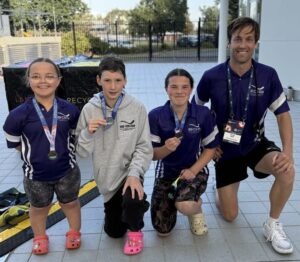 Opportunities are available for those committed to competition: school meets, local and regional competitions, state and national championships, and even international championships for those who excel. Programs within Swimming Victoria Performance Pathways support athletes who demonstrate the drive and capability to reach world-class levels, including the Paralympics, Deaflympics, and Virtus Games.
High Standards in Training and Coaching
The growing SGB Multi Class squad ranges in classifications from s6 to s19, from ages 10yrs to 22yrs old, with dedicated coaches who have all trained in Sports Inclusion. Their achievements highlight the value of competitive sport for people with disabilities, proving that with dedication and the right structure, personal best performance is within reach for anyone with an impairment.
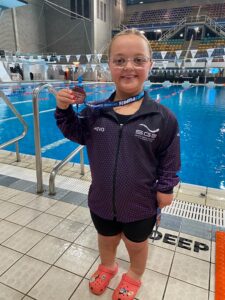 Testimonial – Gemma Cook
SGB Multi Class representative, s6 swimmer Gemma Cook shares her experience as a Multi Class swimmer, “The thing I love most about Multi Class swimming is that I feel like it is made for me. It’s not like other sports where I feel like I’m being “a token participant”. With swimming I can work hard and be recognised for my effort and be something more than just a short person with a physical disability, I’m a competitive swimmer.
My swimming squad all respect my efforts, and I feel like I really belong. Then within our club I have the extra feeling of belonging to our Multi Class group. Beyond this, I get to meet other MC swimmers from all over Victoria and Australia, who I get to compete against and be inspired by”.